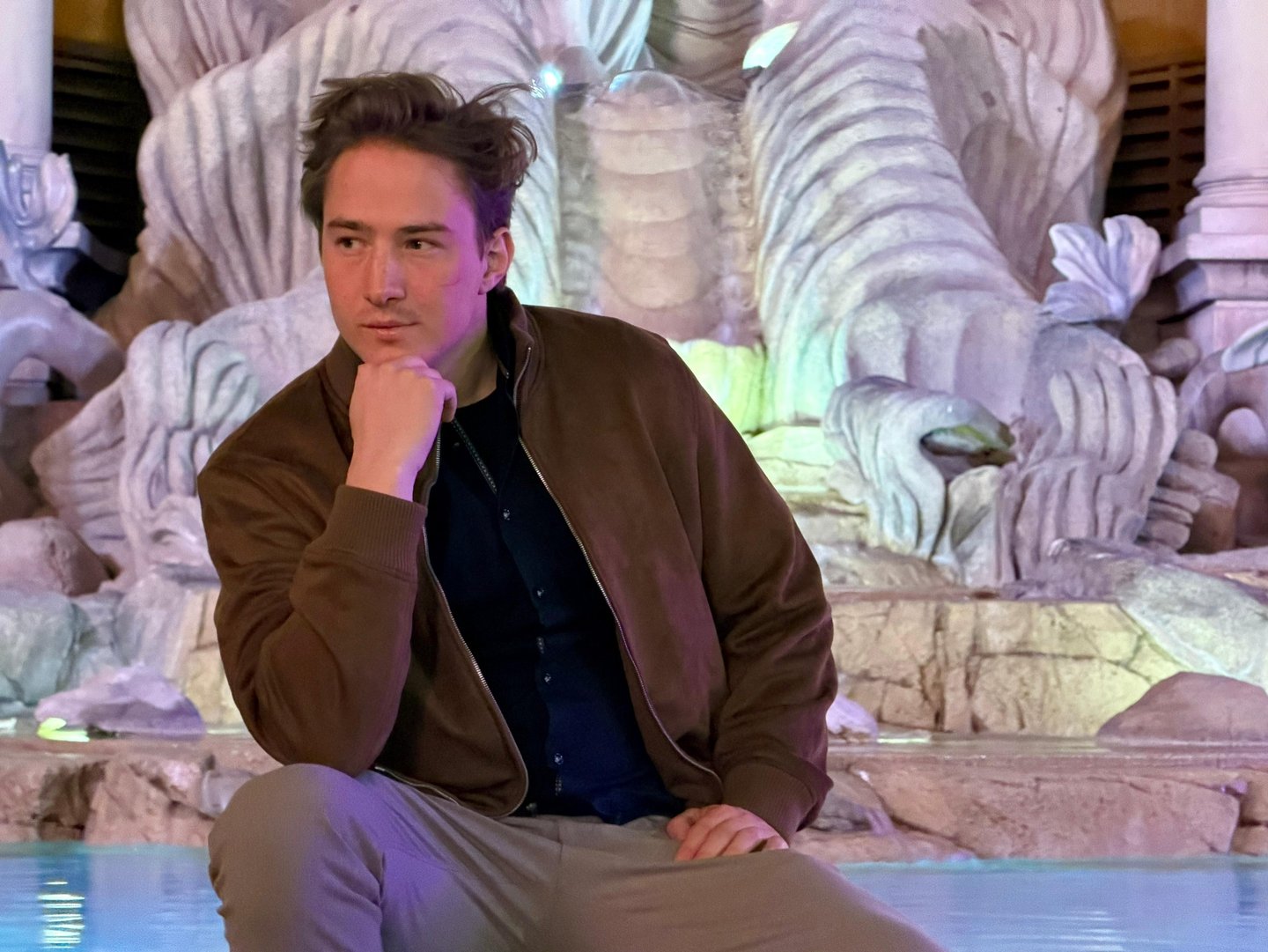
About me
I'm an interdisciplinary AI researcher and PhD candidate in AI for biomedicine, advised by Karsten Borgwardt (Max Planck Institute of Biochemistry) and Maria Brbić (EPFL).
My goal is to build the foundational machine-learning methods that enable the next generation of medicine—especially for complex diseases where today's models and clinical pipelines still fail (cancer, autoimmune disease, neurodegeneration, and chronic inflammatory disorders).
Research focus: foundation models for the immune system
A central theme of my work is modeling the human immune system. The immune system is both our most powerful defense and, in many conditions, a major driver of pathology—e.g., severe outcomes in viral disease and the self-damage seen in autoimmunity. Despite breakthroughs like immunotherapy, the immune system remains hard to reason about because it is context-dependent, multi-scale, adaptive, and strongly shaped by interaction networks across cells, tissues, and time.
My bet is that AI can help move beyond intuition-limited reasoning—by integrating large, heterogeneous biological datasets and extracting mechanistic, testable structure from them.
Technical interests
I work on ML methods at the intersection of representation learning, generative modeling, and structured biological data, including:
Geometric deep learning for molecular and cellular structure (equivariance, symmetry-aware models)
Diffusion and other generative models for biological structure and distributional uncertainty
Multimodal foundation models for immune data (single-cell transcriptomics, protein/epitope, perturbations, clinical context)
Graph-based learning for interaction systems and cell–cell / gene–gene networks
Robust evaluation under distribution shift (dataset bias, label noise, uncertainty-aware predictions)
Collaboration
This work is inherently interdisciplinary. I'm especially interested in collaborating with:
Immunologists / experimental labs with perturbation screens, immune profiling, or longitudinal cohorts
Clinicians / translational groups working on immunotherapy response, autoimmune stratification, or severe infection
ML researchers interested in geometric models, multimodal learning, and evaluation under shift
If you have data, a well-defined therapeutic question, or a hard modeling bottleneck, I'm happy to talk.
AI safety & biosecurity
In parallel to my biomedical research, I take the risks from advanced AI systems seriously. I'm part of the Munich AI safety community and previously participated in a technical AI-safety reading group for two years during my Master's in Amsterdam. If you're looking to enter AI safety research or want pointers toward high-quality communities and institutions (technical or governance-oriented), feel free to reach out—I'm happy to connect you to the right people.